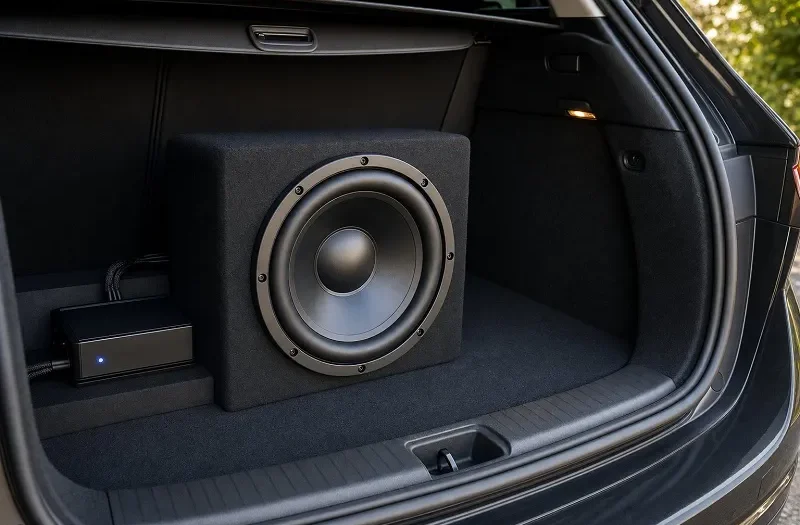
Subwoofer innovations are transforming the way bass is experienced on the road. Car audio systems benefit from advanced materials, improved power delivery, and smarter integration, resulting in more immersive sound. This article looks at how these advances affect in-car audio quality and why understanding them matters to car owners.
Advancements in subwoofers for cars have played a significant role in shaping overall sound quality in car audio systems. Car manufacturers and audio enthusiasts work to address acoustic challenges that are unique to vehicle cabins, such as confined spaces and persistent road noise, which can make it difficult to accurately reproduce deep bass. As car audio technology evolves, it helps improve clarity and balance in sound, allowing drivers to notice subtle details that may have been lost previously. By staying informed about how innovations in subwoofers for cars impact in-car listening and system choices, both hobbyists and everyday drivers can enhance their audio experience.
Bass performance and acoustic challenges in vehicles
Within a vehicle, low-frequency sound reproduction is affected by the cabin’s shape, the materials of the seats, and consistent background noise. Resonance and vibration within the enclosure can blur bass, making subwoofer design and placement essential for achieving clarity and fidelity. Even advanced setups require careful tuning and component selection to address these cabin-specific issues.
The interaction between low frequencies, road noise, and reflective surfaces influences how realistic music sounds while driving. Strong, clean bass is often seen as an indicator of quality in car audio, reflecting the importance of integrating subwoofers into a well-balanced system that uses recent technological advances.
Material science and enclosure innovations in subwoofers
Advances in materials, such as using lighter and stiffer cones made from composite blends and anodized aluminum, help control distortion and improve durability. Enhanced rubber surrounds allow for better linear movement, resulting in consistent performance at both high and low volumes. These improvements contribute to tighter, more accurate bass and reduce the potential for long-term wear or failure.
The design of enclosures also plays a vital role, with custom-fit boxes enabling effective use of limited car interior space and tuning the natural response of each subwoofer. Improvements in magnet technology and motor assembly have led to better power handling and sensitivity, letting car audio systems achieve impactful bass with less energy.
Integration, amplification, and processing advances
Pairing subwoofers with well-matched amplifiers ensures power delivery meets the specific requirements of each driver. The integration of digital signal processing allows for precise adjustments in bass response, phase alignment, and crossovers, creating a smoother blend between subwoofers and main speakers. This results in more dynamic and lifelike playback of music at all volume levels.
Major car audio brands, such as Pioneer Audio, design systems that are optimized for seamless integration with advanced infotainment units and digital sources. Features like built-in tuning tools and intuitive interfaces simplify setup for everyday users, enabling them to access the benefits of modern car audio technology without expert knowledge. These advancements help minimize distortion and ensure more accurate sound reproduction.
Realistic expectations and key evaluation tips for buyers
Current technology in car audio can deliver faster bass response, less distortion, and deeper frequency extension compared to previous generations of equipment. For the best results, subwoofers for cars should be matched to the appropriate enclosures and amplifier power ratings. Attention to installation quality and fit is crucial, as issues such as rattles or air leaks can undermine the benefits of hardware improvements.
Simple listening tests, like checking for clean bass at moderate volume, can identify potential system problems quickly. While technical measurements such as frequency response and total harmonic distortion are often referenced, evaluating sound quality in your own vehicle is essential. Choosing a system that aligns with your preferred style of music will help maximize your enjoyment of car audio on the road.
Originally founded in 1930 to build dynamic speakers, Pioneer Audio has grown into a major developer of car audio equipment. The brand is recognized for user-friendly features such as touchscreen navigation and seamless device connectivity in its automotive systems.